
The Tracking Indian Youth Attitudes Media Fellowship presents the next in a series of stories capturing the socio-political views and experiences of young people across India.
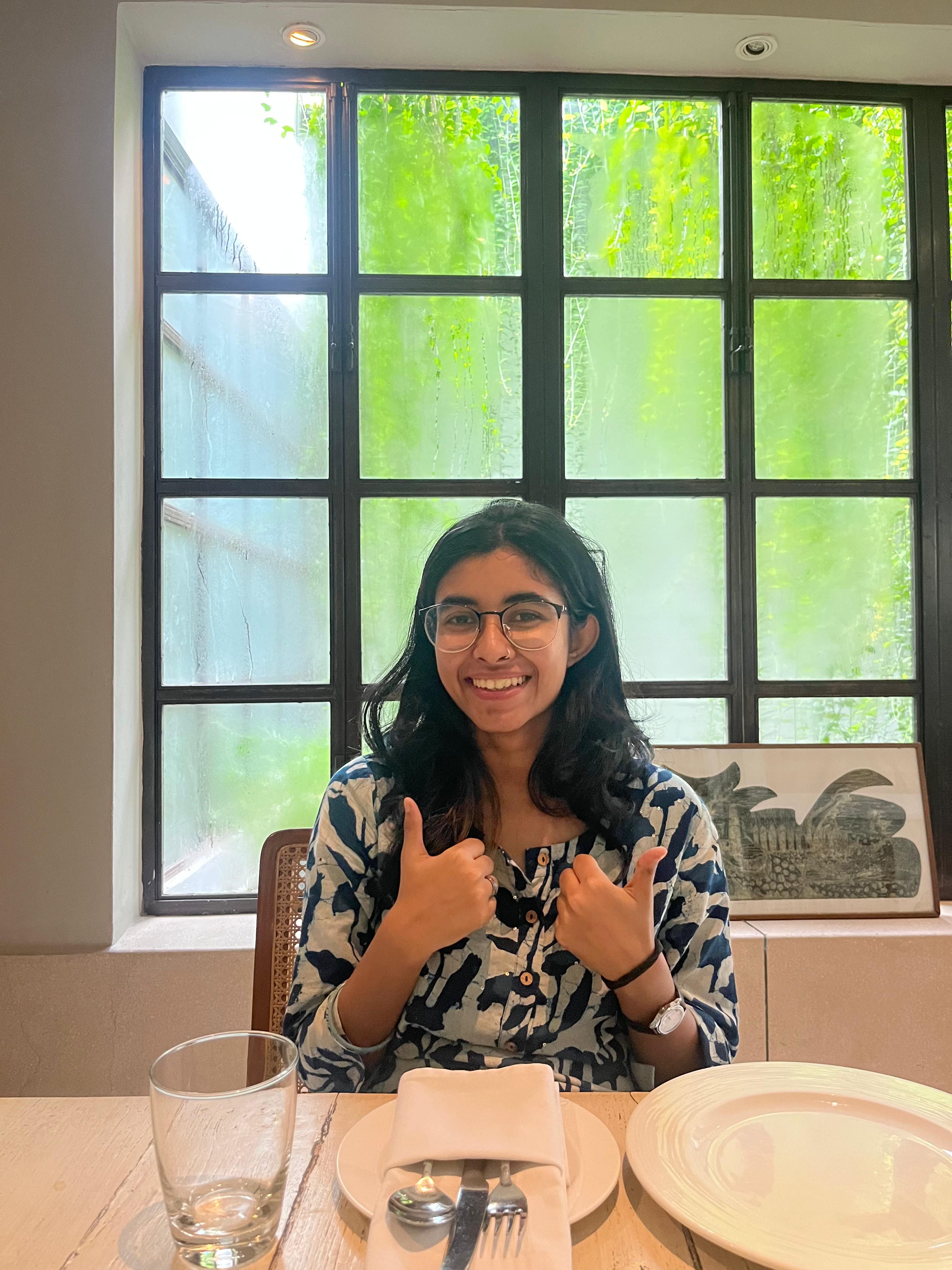
At a time when young voices are reshaping conversations around politics, religion, gender, and identity in India, Ayesha stands out for the calm yet critical lens she brings to these debates. Hailing from Aligarh and currently pursuing her master’s degree in Dehradun, she represents a generation that balances tradition with questioning, and faith with freedom. In this candid conversation, Ayesha reflects on politics, gender equality, religion, and what it means to be Indian today.
“From the outside, you wouldn’t even know—I practise my religion quietly. For me, faith is about a personal connection, not performance.”
Read the full story below. Profile by Nehal Gupta.
Nehal: Can you tell me a little about yourself?
Ayesha: My name is Ayesha. I’m from Aligarh, Uttar Pradesh. I completed my bachelor’s degree in Zoology from the University of Delhi, and I am currently pursuing my MSc in Dehradun.
Nehal: How do you usually keep yourself updated?
Ayesha: I mostly get my news from Google and Instagram. I also watch YouTube videos on topics like the environment and politics. I try not to get emotionally involved in news stories and instead look at them through a critical lens. I find The Indian Express and some YouTube channels reliable, but most of the time I prefer reading the work of independent journalists.
Nehal: Do you think young people today care about political or social issues? Do they even trust politicians?
Ayesha: It depends a lot on the circles you are part of. Some people don’t engage at all, while others follow the news regularly. In my circle, most people are quite aware. Personally, I don’t trust politicians much. But if a politician has done genuinely good work, I think people naturally place more trust in them.
Nehal: Do you ever feel pressured to align with your family’s political views?
Ayesha: Not really. My parents are apolitical. They don’t even have voter IDs and rarely talk about politics. I do align with some views within my community, but I don’t feel pressured. If something feels problematic, I don’t hesitate to disagree. Among the youth in my community, especially educated ones, I see a lot of healthy political discussion.
Nehal: What usually guides your political decisions, especially during elections?
Ayesha: I mostly consider what politicians say in their speeches. I also look at their policies and past work, but I know many promises remain unfulfilled. Often, politicians talk about subsidies, but I don’t think that’s good for the economy in the long run. So for me, it often comes down to choosing the lesser evil.
Nehal: How do you see gender equality in India?
Ayesha: Speaking from my own field, which is related to wildlife ecology, working hours for women can be very demanding. There’s also a strong bias against women working in forests or in the field. We constantly face doubts and resistance, so we have to fight many battles just to do what we love.
Nehal: Does your religious background influence your personality?
Ayesha: I would say yes, but in a personal way. I do practise my religion and pray, but I don’t do it for others to see. From the outside, you wouldn’t even know. For me, it’s not about showing faith—it’s about a personal connection.
Nehal: So, do you think religion should remain limited to personal life?
Ayesha: Since we are part of a secular state, I believe religion should not shape policies. If the state starts making decisions based on religion, it would then have to decide how much each religion should be monitored, which isn’t right. Festivals and celebrations are fine, of course. But beyond protecting freedom of practice, the state should avoid interference.
Nehal: What about social issues within religions? Should the state intervene there?
Ayesha: Yes, I think there should be safeguards against regressive traditions, such as triple talaq, which are harmful.
Nehal: Is there any social issue in your community or society that really bothers you?
Ayesha: Yes, communalism in India deeply concerns me. India is an incredibly diverse country, so differences are natural when communities live together. But today, religious tensions feel much stronger because groups have become rigid and hostile towards one another. On Instagram, during conflicts, I see even educated people fuelling these divides. I don’t think it’s about being uneducated—it’s about media brainwashing. News outlets push certain narratives, and people absorb them without questioning. If we want to address communal tensions, we need stricter regulation of media content and much better media literacy.
When I came to Dehradun for my MSc, I was the only Muslim in a batch of nearly 400 students, including seniors. Some people already had preconceived notions about me, but I turned out to be nothing like what they imagined. Even my friends have said things like, “You’re different—not like the other Muslims.” That itself shows how little interaction there really is between communities. This lack of everyday social interaction creates barriers and deep misunderstandings.
Nehal: What does being an Indian mean to you?
Ayesha: To me, it means being born in a diverse country. This is my homeland, my country, and I love it.
This is an ongoing series of profiles documenting the experiences of young people across India. Stay tuned for more stories from young workers across India. Follow us on social media for more updates.