
The Pehli Peedi Fellowship presents the first in a series of stories highlighting the experiences of first-generation students across India.
Mohit Joshi is a 21-year-old fourth-year undergraduate student at Ashoka University, majoring in Economics and Finance with a minor in Entrepreneurship. A first-generation college student from rural Uttarakhand, Mohit’s journey into higher education has been marked by uncertainty, self-discovery, and steady growth. Deeply passionate about finance and investing, he reflects on how university life has shaped not just his academic interests, but also his confidence, sense of belonging, and long-term ambitions.
“When I entered university, I felt quite low and underconfident about many things. Everything felt overwhelming, from academics to social interactions. But over time, I started working on myself and slowly began discovering what I’m truly good at. That process of self-discovery made me feel unique.”
Read her full story below. Profile by Radha.
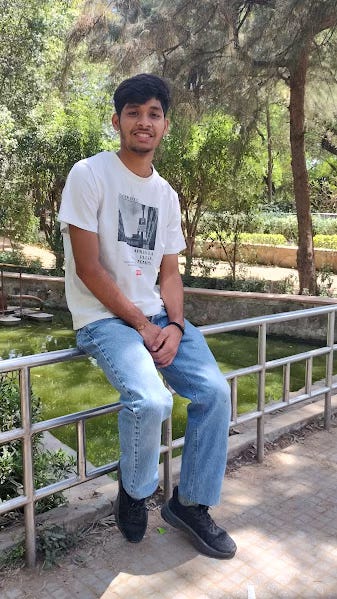
Radha: Hello, thank you so much for taking out time for this interview. Can you tell me about yourself?
Mohit: Hello! My name is Mohit Joshi, and I’m 21 years old. I was born and raised in Uttarakhand. I’m currently pursuing a degree in Economics and Finance and minoring in Entrepreneurship at Ashoka University, and I’m entering my fourth year. I come from a rural background, where things tend to move slowly and opportunities can be quite limited.
Radha: Tell me about your family—what do your parents or guardians do?
Mohit: We are a family of five. My mother is a homemaker, and my father works in the corporate sector. In terms of education, both of them completed only primary schooling. Due to limited resources and opportunities, they weren’t able to pursue high school or higher education. Despite this, they have always prioritised our education and ensured that we had access to quality learning.
Radha: Which school did you attend? Government or private?
Mohit: I attended a private school called Nanakmatta Public School. It was a day school and the most affordable option in my area that still provided a good quality education.
Radha: How many students were in your 12th class with you? How many went to college?
Mohit: There were 18 students in my batch. Out of those, around 8 or 9 went on to pursue higher education. Some chose local colleges, while others moved to cities for better opportunities. A few opted for professional courses, and some even went abroad. My school always encouraged us to pursue higher studies, believing that education was the key to building a better future.
Radha: Was education something people in your family or community talked about often?
Mohit: Yes, in my family, education was always valued and supported. My parents never made any distinction between me and my sisters—we were all encouraged to study and pursue our goals. Even during financial hardships, they prioritised investing in our education.
In the community, people do support education, but there are still certain expectations. For boys, the focus is often on getting a job quickly and settling down. Girls are encouraged to study, but they still face challenges, especially when it comes to moving out of the city for higher education.
Radha: Are you comfortable sharing your caste? What role has caste played in your life?
Mohit: Yes, I’m comfortable sharing. I belong to the General category. Honestly, caste hasn’t played a major role in my life. I haven’t faced discrimination based on caste, nor have I received any particular privileges because of it.
Where I come from, people from different castes, religions, and communities live together, and there is a general sense of mutual respect. My school environment was also inclusive. At Ashoka, being a liberal arts university, the focus is on individual identity and growth, so caste hasn’t influenced my academic or personal journey in any significant way.
Radha: Was it always known that you would go to college? If not, who inspired you to go?
Mohit: It wasn’t always obvious that I would go to college. Initially, I planned to prepare for government jobs after Class 12, such as joining the military or appearing for competitive exams.
That changed because of my school instructor, Dr. Kamlesh Atwal. He was a strong advocate for residential undergraduate education and had completed his PhD from JNU. He constantly encouraged us to aim for reputed residential universities, believing that such environments help students discover their interests and shape their future. His guidance played a crucial role in opening my eyes to a different path.
Radha: Were there any hurdles that you had to overcome to go to college?
Mohit: Yes, there were several challenges. One of the biggest was the lack of resources—something as basic as not having a laptop made the application process difficult. I also struggled with understanding application forms, writing personal essays, and attempting on-the-spot written tasks.
Another major hurdle was the language barrier. Coming from a background where English wasn’t commonly spoken, I felt underconfident expressing myself, especially in writing. Over time, however, I learned to adapt and push through these difficulties.
Radha: How has your university experience been so far? What surprised or challenged you?
Mohit: My university experience has been a mix of challenges and growth. Academically, it was overwhelming at first—the curriculum, pace, and competitive environment were all unfamiliar. It took time to adjust and feel comfortable.
Socially, I initially struggled to make close friends and often felt out of place because of my background. Gradually, I found people I deeply connect with, and those friendships have made this journey much more meaningful.
Radha: Do you feel a sense of belonging here? What helps and what makes it difficult?
Mohit: I do feel a sense of belonging now, but it wasn’t immediate. The diversity of backgrounds and experiences initially made me feel like I didn’t quite fit in.
Over time, I built my own community—friends from different backgrounds who understand and support me. That sense of mutual support has helped me feel at home, even if my experience of belonging looks different from others’.
Radha: Do you feel that being first-generation affects how others perceive you?
Mohit: There were times when I overthought how others perceived me—how I spoke, participated in class, or even dressed. As a first-generation student, it’s easy to feel like you’re constantly being judged.
With time, I’ve learned to navigate that pressure. I’ve grown more confident, become more aware of what to share and when, and stayed consistent in who I am. That has helped me find my space without compromising my identity.
Radha: Do you feel seen and heard in classrooms, societies, or larger campus spaces?
Mohit: Initially, I doubted my abilities, especially as a speaker. Over time, I realised that I am a creative thinker who approaches situations rationally and from a broader perspective.
Understanding that creativity and empathy are my strengths helped me contribute more meaningfully. Being involved in campus societies and working with different offices allowed me to open up and recognise my own potential.
Radha: If you could change one thing about higher education today, what would it be?
Mohit: I believe real change needs to start at the school level. The quality of schooling creates a massive gap and determines how prepared students are for higher education. Our starting points are unequal, and that impacts confidence and outcomes.
I strongly believe that every student should have access to affordable—or ideally, free—high-quality education. A strong foundation empowers students to navigate higher education and the competitive world beyond with confidence.
Radha: Thank you so much for your time. All the best!
This is an ongoing series of profiles documenting the experiences of young people across India. Stay tuned for more stories from first-generation students across India. Follow us on social media for more updates.