
The Pehli Peedi Fellowship presents the first in a series of stories highlighting the experiences of first-generation students across India.
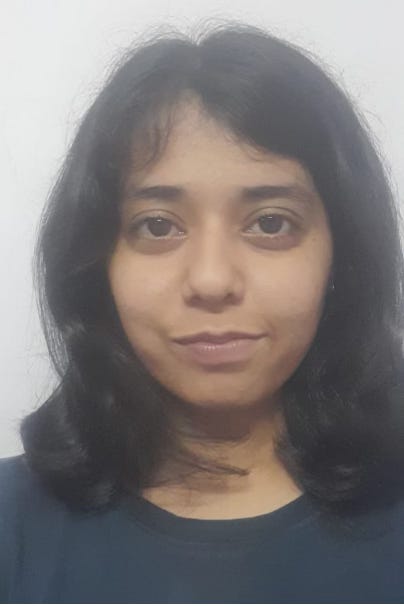
Priya Yadav, a 22-year-old automobile engineer from Delhi, reflects on navigating university life as a first-generation student without prior exposure, balancing financial constraints, and making independent academic choices while managing her family’s expectations.
Read his full story below. Profile by Yatika Singh.
Yatika: Hello, Priya! Please tell me about yourself.
Priya: I am from New Delhi. I am currently working as an automobile engineer and am also applying for a Master’s degree. Previously, I studied at UPES, Dehradun, where I completed my Bachelor’s degree in Computer Applications. I took a gap year at 18 to prepare for government teaching job exams, but later decided to continue with higher education. Before university, I completed my secondary schooling at a private school near Pitampura, Delhi.
Y: What do your parents do?
P: Both of my parents run a hardware and electrical shop together. My father came to Delhi from a village in Uttar Pradesh called Majgaon when he was a young adult. He studied BCA at IGNOU for some time but dropped out due to financial issues and started the shop he runs today. My mother studied until the fifth grade at a local government school in her village, Dumra, in Madhya Pradesh.
Y: Was education a topic that was discussed often in your family or community?
P: It wasn’t. My mother used to tell my siblings and me that we needed to study because we were living in a city and did not have any other option. Education was seen mainly as a means to work. This mindset came from the fact that my father and his siblings were sent to the city to earn at a very young age, and they faced a lot of pressure at that stage of life—especially my father, since he was the oldest.
Y: Do you have any siblings? If you’re the oldest, do you face similar pressure?
P: No, my parents did not let my siblings or me face that pressure. Of course, now that I’m 22, some of it is coming naturally, but not earlier. They did not want us to go through what they experienced at our age.
Y: Did they influence your choice of degree?
P: My parents wanted me to become a teacher so I could have a fixed 9-to-5 schedule and benefits like summer vacations. They especially wanted me to be a government teacher. They still have traditional thinking and wanted me to have a stable job with strict hours so I could give time to my family after marriage. I wanted to rebel and do something in Computer Science, so I chose Computer Applications. They supported my decision.
Y: Was it always expected that you would go to college?
P: Yes. They did think about me working after school, but they also wanted me to receive the education they never had. My mother believed she had invested a lot in my schooling by sending me to a private school, so she wanted me to continue my education at a university.
Y: Did this expectation ever feel like a burden?
P: Sometimes, yes—and it still does. They see college mainly as a path to employment, so the expectation is a high income. None of my relatives work in the corporate sector, so my parents are unfamiliar with today’s job realities. They believe most people earn in crores. For me, that feels almost impossible. I don’t think I’m smart enough to reach that level so soon, but I’m still trying.
Y: Did you feel mentally and emotionally prepared for college life before joining UPES?
P: No. After getting admitted to UPES in 2021, I realised I didn’t understand many things about college life, even though my first year was online. When the COVID-19 lockdown ended, I just wanted to get out of my house, but I never imagined how different offline college would be. My parents had no information or advice to prepare me, and I had no exposure of my own—not even through movies. There were no elder siblings or relatives I could turn to. Everyone else on campus seemed to have guidance from parents, siblings, or friends who had been to university. I didn’t even know what placements were, yet everyone else seemed prepared. I was confused all the time, but I adapted.
Y: Was there adequate support for you as a first-generation student?
P: In the beginning, it was extremely frustrating, and I was very scared. Although everyone was new, many already knew things through people they trusted. That’s when I realised how financial and social privilege helped some students stay ahead. I felt very alone. I couldn’t tell my parents because they wouldn’t understand and would think I wasn’t trying hard enough. Eventually, I began asking my roommate, friends, and acquaintances about courses and certificates. They helped to an extent, but beyond that, I really needed family guidance, which I didn’t have.
Y: You mentioned financial privilege earlier. Was financial stability a concern while joining university?
P: Yes. Initially, I only considered Delhi University to reduce costs, but I couldn’t pursue BCA or B.Tech. there because I hadn’t taken the science stream in school. I had studied programming and mathematics, which helped me get into UPES. JEE wasn’t an option due to the intense competition. I chose BCA over B.Tech. because it was cheaper and had a similar syllabus. Studying in Delhi would have been far more affordable since I could live at home, but DU admissions were delayed and I was about to lose my UPES seat. My father then decided to arrange funds. The pandemic helped too—online classes meant no living expenses in the first year. I also received a 20% scholarship for girl students and had the option of quarterly fee payments.
Y: Did you have to make sacrifices due to financial constraints?
P: Yes, especially with daily spending. I rarely went out and sometimes even skipped meals. I felt that since my parents were already paying so much, I shouldn’t spend anything extra. My friends often noticed that I never joined them, but even a movie ticket felt expensive. Looking back, it wasn’t that costly, and my parents wouldn’t have refused. It just didn’t feel right to ask.
Y: What can universities do better for first-generation students?
P: Universities need to help more. Professors should share academic and extracurricular information clearly instead of assuming everyone already knows everything. There should also be more scholarships to support students financially. They just need to start caring.
This is an ongoing series of profiles documenting the experiences of young people across India. Stay tuned for more stories from first-generation students across India. Follow us on social media for more updates.